
Artist Statement
For a long time, light was perceived as a sign of the transcendent — as something that passes through matter: through stained glass, gold, and the architecture of temples. Today, the source of light has changed. The screen glows on its own, and digital interfaces are becoming new structures of presence and attention.
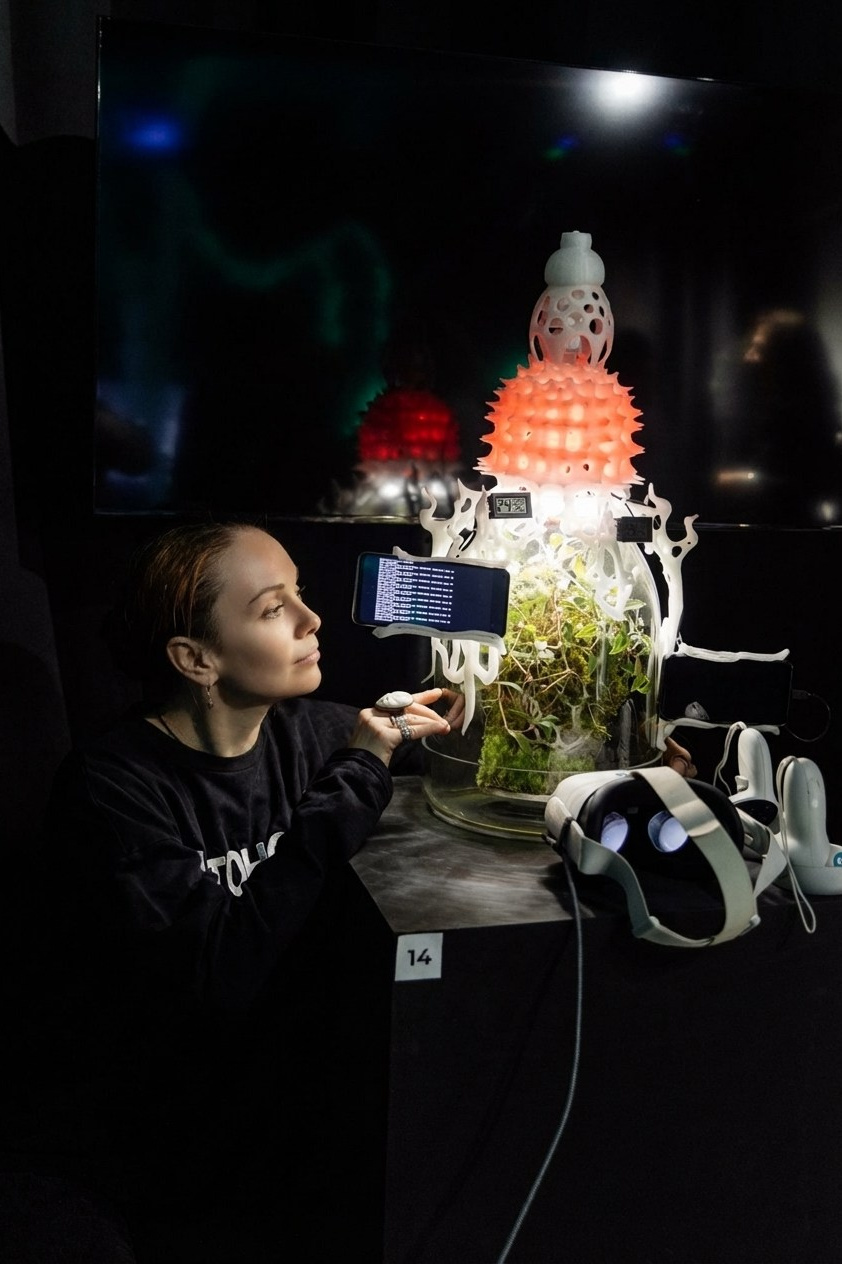
My practice explores this transition from sacred light to technological light — and how, along with it, the ways of experiencing faith, memory, and presence are changing. I work with forms associated with religious architecture and the visual systems of sacred experience, but I examine them not as confessional symbols, but as historical mechanisms for focusing attention and producing collective experience.
In my work, I combine living plants, recycled plastic, and XR. Biological processes coexist within them alongside digital and synthetic materials. Recycled plastic preserves the traces of consumption and the urban environment; plants continue to grow and decay; digital images exist as unstable forms of light. These elements form hybrid environments in which the viewer encounters a new type of sacredness — not separate from technology, but emerging within it.
The context of this practice is tied to the post-Soviet experience of losing a sacred language and its subsequent return in fragmented form — through media, interfaces, virtual spaces, and techno-utopias. An important anchor for me is Russian Cosmism, where the overcoming of death was understood not as a metaphor, but as a technical and ethical project.